Creating A Natural-Looking Play Surface For A Nursery In Chelmsford
13 Nov 2026 10:11

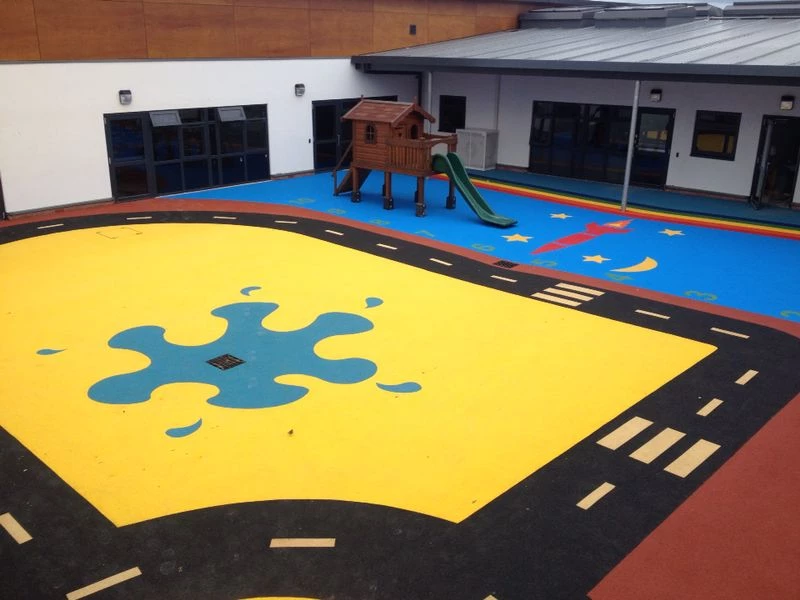
Not every school has the luxury of a large, purpose-built playground. In many cases, there are outdoor areas that have gradually fallen out of use because the ground is unsuitable, the layout is impractical or the space simply does not offer enough opportunities for children to play.
We recently undertook a playground improvement project at a school in Leicester, where the objective was to turn an underused outdoor area into a more inviting and functional play zone. The school wanted to make better use of the available space, creating an environment that could accommodate everyday play without requiring extensive ongoing maintenance.
Following an initial conversation with the client, we discussed how the area could be improved through suitable safety surfacing, careful ground preparation and a layout that made the most of the space available.
The first challenge was understanding how the area could be used once the work was complete. An outdoor space may appear straightforward to resurface, but the intended activities, existing ground conditions and surrounding boundaries all influence the installation approach.
During our discussions, we considered the school's priorities, including durability, ease of maintenance and the importance of providing a surface suitable for regular use by children.
We also looked at the practical considerations involved in carrying out the work on an active school site. Deliveries, material storage and access for installation equipment needed to be coordinated carefully to avoid unnecessary disruption.
Rather than treating the project as a simple surfacing exercise, we approached it as an opportunity to improve the usability of the entire area. Good preparation at this stage helps ensure the finished space meets the client's requirements and that the selected materials are suitable for their intended application.
Once the approach had been agreed, we moved on to preparing the area for installation.
Ground preparation is a particularly important part of playground construction. Any existing loose material, unsuitable surface layers or irregularities need to be addressed before the new surfacing can be installed. The required work will vary depending on whether the existing ground consists of soil, an established sub-base, concrete or another surface.
Where a new safety surface is being installed, the underlying construction must provide suitable stability, levels and drainage. Poor preparation can contribute to unevenness, standing water and premature deterioration, so these details should not be overlooked in favour of simply getting the visible surface laid.
We checked the prepared area before proceeding, ensuring that the groundwork was suitable for the specified surfacing system.
The final construction requirements depend on the type of finish selected. For example, wetpour rubber surfacing requires a suitable substrate and carefully controlled installation of its rubber layers, while artificial grass systems have their own requirements for sub-base preparation, drainage and edge restraint.
Establishing the correct specification at the outset helps avoid unnecessary complications later in the project.
With the preparation work completed, we progressed to installing the new playground surface.
Our focus was on achieving a consistent finish that would make the area more practical for everyday use. Attention was given to the edges, transitions to surrounding surfaces and the overall condition of the finished installation.
These details can have a significant impact on how a play area performs. Changes in level, poorly finished perimeters and unsuitable transitions can affect accessibility and create maintenance issues, so they need to be considered as part of the installation rather than left until the end.
The surfacing specification must also reflect the intended use of the play zone. If children will be using fixed play equipment, the relevant critical fall height must be established and matched to a suitable surfacing system. Compliance with the applicable playground safety requirements, including BS EN 1177 where relevant, is an important consideration when specifying impact-attenuating surfaces.
For areas intended primarily for general outdoor activities, the priorities may differ, with greater emphasis placed on durability, drainage, accessibility and ease of cleaning.
By taking these factors into account, we could deliver a more usable outdoor environment tailored to the school's needs.
School projects require careful scheduling, particularly when work takes place during term time or around other site activities.
For a relatively small outdoor play area, a straightforward surfacing installation may be completed within a few working days. However, this is dependent on the amount of groundwork required, the size of the area, material availability and the type of surface being installed. Projects involving excavation, new drainage or extensive sub-base construction will generally require a longer programme.
We planned the Leicester project around the practical requirements of the site, allowing the preparation and surfacing stages to be completed in the correct sequence.
Weather is another factor that can affect outdoor surfacing work. Rainfall can delay excavation, affect ground conditions and prevent certain materials from being installed or cured correctly. Allowing sufficient time for each stage is preferable to rushing the work and compromising the finished result.
Keeping communication open with the school throughout the process also helps manage expectations, particularly where access restrictions or reopening arrangements need to be coordinated.
Improving an outdoor space is not simply about giving it a fresh appearance. A well-planned play zone can help schools make better use of their existing grounds without needing to extend their playground footprint.
A suitable surface can make the area easier to maintain, provide a more consistent environment for everyday activities and reduce problems associated with unsuitable or deteriorating ground conditions.
The project in Leicester highlights the importance of assessing what an outdoor area needs before deciding how to improve it. The most appropriate solution will depend on the available space, the age of the children using it, the intended activities and the condition of the existing ground.
Regular inspections and appropriate maintenance will remain important after installation, helping identify minor issues before they develop into more significant repairs.
If your school has an outdoor area that is rarely used, an uneven surface that needs attention or a playground that no longer meets the needs of its pupils, improvements may be possible without a complete redesign of the grounds.
We help schools, nurseries and other organisations improve their outdoor environments through playground surfacing and related installation work across the UK.
Whether you are considering wetpour rubber, synthetic turf or another suitable playground surface, we can help you assess the requirements of your project and identify a practical way forward.
Contact our team to discuss your outdoor play area and explore the options for turning an underused space into a more functional playground.